Skyborn is a survival MMO that runs entirely in your browser: build up your own floating island, meet everyone in the shared sky city, raid bosses in co-op - and everything you earn is truly yours on Robinhood.
Start Here: Your First Hour
Connect your MetaMask or Rabby wallet (a free signature - no gas, no download), claim your sky island with a one-time $SKY purchase (~$1 - you can get $SKY without leaving the game), then pick a class and a permanent nickname. You spawn on your own floating island with a wooden axe and pickaxe - and nothing else.
A guided tutorial walks you through the first ten steps: chop a tree, mine a stone, build the Cauldron, plant and harvest a crop, cook your first meal, pack it into your combat loadout, portal to Sky City and win your first boss fight.
Tip: your very first boss attempt comes with a FREE revive. Use it to learn the fight - you risk nothing.
Your Island
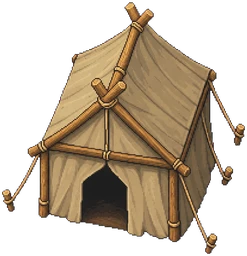 Home Tent
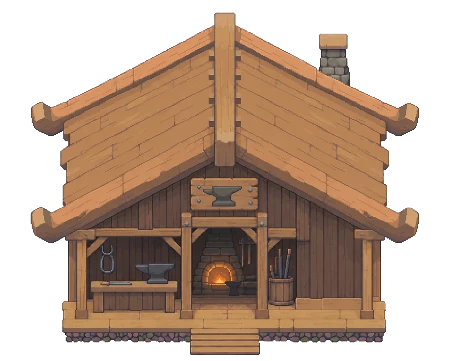 Forge
Forge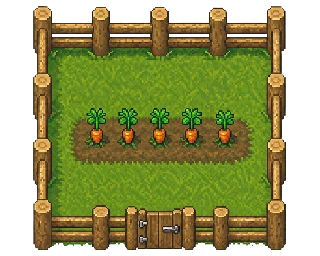 Garden
Everything starts at home. Trees and stones respawn on cooldowns (offline time counts), the garden grows real crops in real time, and the Cauldron turns them into healing food. Build the Forge and Carpentry to craft weapons, armor and tools - better tools gather faster and yield more.
Gold can grow the island itself: each expansion adds a full ring of land and unlocks higher-tier stations. You can also enter decoration mode and rearrange your whole island for free.
Tip: build the Cauldron first (1 wood + 1 stone) and plant seeds immediately - food is your lifeline in every fight.
The World at a Glance
Your island is private. The portal takes you to Sky City - the shared hub where every player walks the same streets: specialised vendors, the player market, Buffs & Boosts, the Boss Gate and the Wildlands gate. East of the city lies the Carnival Island with its games; west, the Guild Hall - join a crew for daily check-ins, guild missions and shared research perks.
The Wildlands is open monster territory - hunt mobs for materials, then descend into three multi-floor lairs (a watchtower, a logger’s hut, a corrupted shrine), each ending in a solo boss.
Tip: you can walk into the city and look around before spending anything - exploring is free.
Combat: Classes, Food and Knockouts
Three classes, three playstyles: Knight (heavy plate, front line), Ranger (light leather, deadly crits), Mage (cloth, raw magic). Your Power and HP come from allocated stat points AND the gear you actually wear - equip your crafts, don’t just own them.
In the Wildlands you fight tab-target style with class skills that level up as you use them. Losing all HP means a 2-minute knockout: you can wait it out, pay Gold to revive instantly, or plan better next time. HP persists between zones - eat cooked food or let passive regen top you up before the next fight.
Tip: never enter a boss room without 3 food items in your loadout - they auto-heal you mid-fight.
Boss Raids: Bring Friends
Bosses are team content: party up to five at the Boss Gate, pick a tier (I/II/III - 15 bosses, levels 1 to 30) and pay the entry in boss keys (bought at the Boss Trader or forged from materials; refunded in full if you leave before the fight starts).
The party shares one boss HP pool, damage is split across the living members, and every boss has an enrage timer that punishes undermanned runs. Rewards scale with your damage contribution: EXP plus artifacts - Ember Shards, Ancient Relics and Boss Cores drop from bosses only.
Tip: a party of three with cheap food beats a solo hero in rare gear. This game rewards friends.
Loot, Upgrades and Gear
 Blessed Scroll
 Boss Key I
 Boss Key II
 Boss Key III
 Gold
GoldArtifacts buy upgrade scrolls at the Boss Trader. Scrolls push any weapon or armor from +1 to +6 with random bonus affixes - but the ladder is hardcore: failing at +5 drops a level, failing at +6 destroys the item. A Blessed Scroll protects one risky attempt.
Three gear lines to chase: universal leather (Wildlands materials), class sets (12 pieces, your class only), and the craft-only metal tier for high-level islands.
Tip: +4 is the safe plateau. Push +5/+6 only on gear you can afford to lose - or bless it.
Quests, Dailies and Leaderboards
One rotating daily quest pays Gold every day (gather, win a boss, or list on the market). Seven leaderboards track levels, weekly XP, boss wins, kills, gathering, island size and upgrade tiers - the weekly XP board resets every Monday, so every week is a fresh race.
Tip: the daily takes minutes and funds your buffs. Log in, do it, profit.
Economy: Vendors, Market and $SKY
Vendors are specialised - each stall buys and sells only its trade, and crafted gear sells for less than the materials cost, so real profit comes from combat loot and the player market - and the market runs on $SKY: you price listings in $SKY, buyers pay in $SKY, sellers get paid in $SKY. Escrow protects both sides; the game burns a 5% fee.
$SKY is the game’s on-chain currency: it unlocks your island, converts from Gold at the city exchange during capped events, and every market trade settles in it on Robinhood. Your items and your $SKY live in your wallet - not on our servers.
Tip: timed buffs (+XP, +yield, +damage) from Buffs & Boosts are the best Gold sink while you grind.
The Carnival
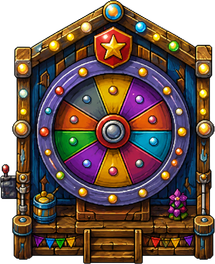 Wheel of Fortune
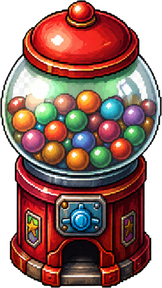 Gacha
GachaThe east island is pure fun with real stakes: the Wheel of Fortune (free spin daily), the Gacha with its ultra-rare Cloudling pet jackpot, Cup Games (first game free daily), a ticket raffle and the Prize Booth. Games cost Gold, but tickets are earned only - nobody can buy their way to the limited-stock cosmetics.
Cosmetics are tradeable on the market, show up on your nameplate and in the rankings - and the Cloudling actually fights: +1% damage, passive regen and a party heal in boss fights.
Tip: the booth stock is global and limited. When Series 1 sells out, the market is the only source.